
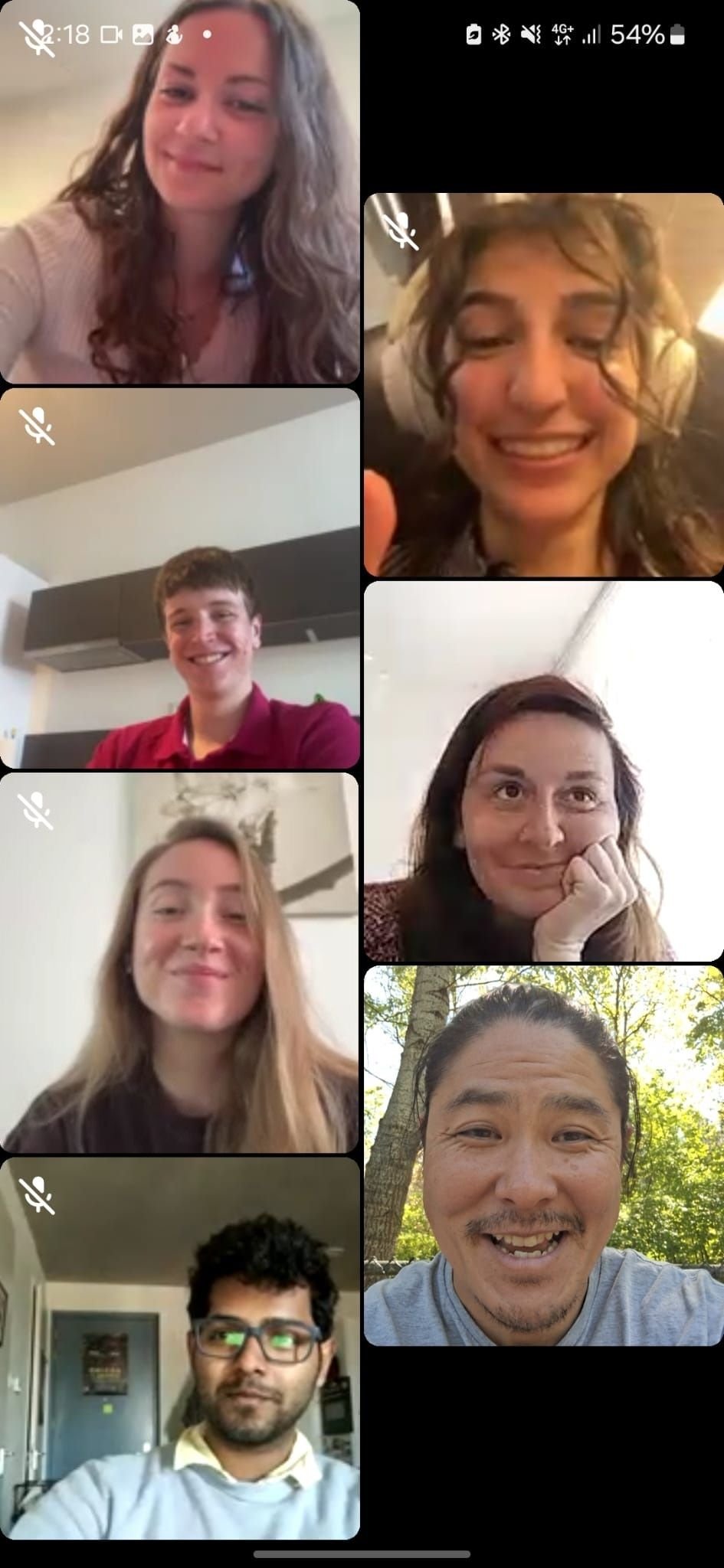
One of my mentors once described academic institutions as “revolving doors” where good people come and go, for one reason or another. While I am very happy to see colleagues move on to greener pastures, I’ve always felt a sense of sadness seeing wonderful people leave Maastricht University.
The budget cuts in Dutch higher education have made it even more difficult for universities to retain talented colleagues, as we now have to push good people out our doors. I will have a particularly bittersweet feeling saying goodbye to (some 🤞 of) the tutors that have been absolutely instrumental in shaping our new Conflict Prevention & Resolution course.
They are extremely hard working, highly competent, charismatic individuals (each in their own unique ways), who care deeply about their students and passionate about teaching. They are all brilliant jurists and problem-solvers (and god forbid, they are mostly non-Dutch). I have no doubt whatsoever that they will be positive catalysts in whatever career they pursue and any institution or firm would be fortunate to have dedicated people like Sabine Kneepkens, Sahel Bahman, David Kermode, Lucia Jeremiašová, Shanay Das Guru, and Francisca Nemeth-Trocado in their ranks.
I just wish (perhaps rather selfishly) that we could have been that lucky institution. More generally, I hope that the current policies won't turn the bittersweet revolving doors into one-way turnstiles. Regardless of whether these tutors stay with us or not, they deserve nothing but respect and recognition for the incredible work that they are doing!! So thank you tutors!!
Moderating the Globalisation & Law Network Maastricht Presentation by Gamze Erdem Turkelli

Absolute delight to moderate the Globalisation & Law Network Maastricht presentation by Gamze ERDEM TÜRKELLİ on her ERC StG Project, GENESIS, about governing human rights through partnerships. Insightful discussions about the diffusion of responsibility in multistakeholder partnerships, encroaching influence and impact of businesses and philanthrocapitalists in closing/exploiting governance gaps, and much more (including chatting about Begüm Kilimcioğlu, who did her Master’s thesis with me and now doing her PhD with Gamze at University of Antwerp). Great session all around!!
Maastricht Vis Moot Day 2025!


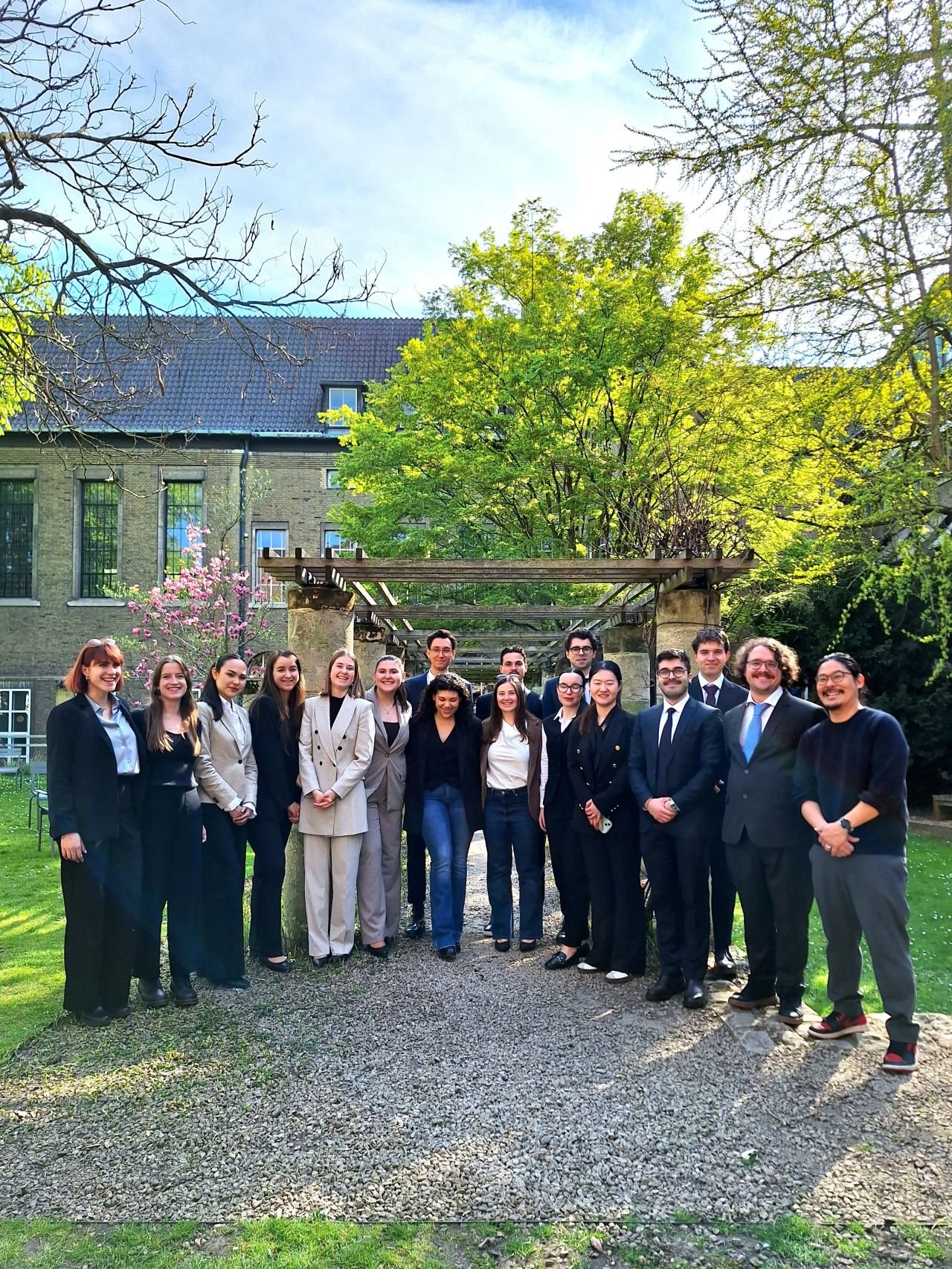

Many many thanks to the Vis Teams from Maastricht University, Leiden University, University of Liège, and De Haagse Hogeschool / The Hague University of Applied Sciences for taking part in the first Maastricht Vis Moot Day at the Maastricht University Faculty of Law. A very special thank you to the arbitrators who came to listen and comment on the teams (not to mention on a Saturday): Willem Loof, Alexandru Daniel On, Mindy Nunez Duffourc, Alexandra Zaytseva, Timothy Noelanders, Joan Duhaylungsod, Sahel Bahman.
Wishing you all the very best of luck at the Willem C. Vis International Commercial Arbitration Moot in Vienna!!
Conference on "International Arbitration in a Brave New World" in Maastricht!


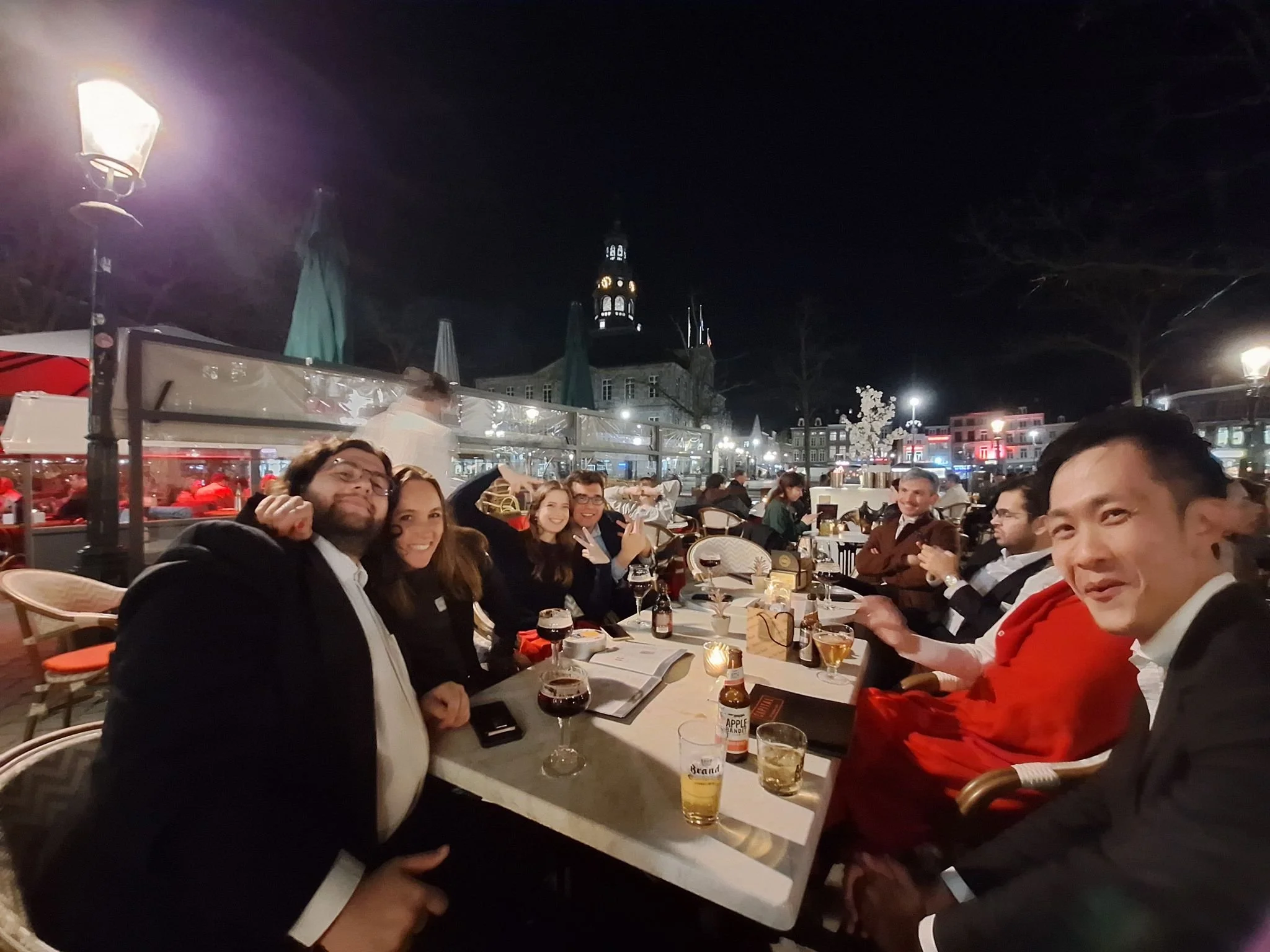
Words cannot express the gratitude that I have for everyone who took part in our conference, International Arbitration in a Brave New World, this Friday. While I am still processing the insightful words that our panelists kindly shared with us, I wanted to share some glimpses from the event and thank everyone who made this event possible: Eva Chan, Bas Van Zelst, Guillermo J Garcia Sanchez, Piotr Wilinski, Stefanie G. Efstathiou, LL.M. mult., Eugene Thong 唐伟良 FCIArb, Nadir Khalil, Amanda Lee FCIArb, Shayan Ahmed Khan, Lillian Li, Paula Baldini Miranda da Cruz, Maarten Draye, Johannes Hendrik Fahner, Jan Smits, Ana Jezersek, Szymon Górny, Anna Haesaert, Georgios Pliakas, Aleksandra Jabłkowska, Natalia Podstawka, Lara Vangoethem, Iris Cecconi, Philine Koomen, Jessica van der Kamp, Dr. Artemis P. Malliaropoulou, Jasmine Qiu.
Special thank you to the audience members (many students from my IBL and CPR courses that took time during their exam week to come listen to our speakers). In a world that is seemingly less kind and more intolerant than before, we hope that the new generation of problem-solvers were inspired by the speakers and go on to deal with many of the challenges we discussed at the conference 🔥
Conflict Prevention & Resolution (CPR): Non Scholae Sed Vitae
In his book, The Art of Negotiation, Michael Wheeler notes that successful negotiators expect the unexpected. To practice thinking on your feet and adapting to volatile circumstances, he recommends negotiators-in-training to try improv (or to train as a jazz musician).
Taking a cue from Wheeler, our new Conflict Prevention & Resolution course is trying to break the mold of a traditional skills course by pushing the boundaries of what we can do in a traditional classroom setting: From eating natto* to speed dating, from doing improv sketches and conducting peacemaking circles to holding happy (office) hours, we are trying everything (some conventional and some very unconventional).
* a not so subtle nod to the now cancelled “International Business Law” course (for the students to experience cultural relativism and understanding what “fit for human consumption” means in the context of a contractual agreement).


Not only are we trying to mix different activities into our classrooms, but we are integrating findings from cognitive neuroscience, organizational psychology, evolutionary anthropology, and much more to get to the root of our conflicts and how we can prevent/resolve them better. In this sense, much of what we are trying to do is to encourage students to figure out how they can get out of an adversarial situation, rather than escalating the conflict. This has - thus far - proven to be a rather difficult task given that for many law school students, the term “thinking like a lawyer” has become synonomous with “winning an argument at all costs” and uttering phrases like “Then I’ll see you in court!” (so escalating, rather than de-escalating).
The core aim of our CPR course is to help our students reduce the frequency, duration, and the intensity of their conflicts (or that of others). In doing so, we’re tackling questions like what do we want, what do we value, what do we (not) know. As a result, some of the students have noted that this course feels a bit like “therapy” or “counseling”. In addition to various introspective exercises, we also engage the students to tackle substantive issues with topics such as smashing the patriarchy, law and ethics (or the lack thereof), and learning about on-going atrocities taking place around the world (last week, we went in-depth with the conflict in Sudan).
While we also practice traditional negotiation, mediation, arbitration and litigation (i.e. moot court), we ultimately want our students to develop skills to get themselves and others out of conflict. The primary aim of this course thus embodies Seneca’s idea of non scholae sed vitae (we do not learn for school, but for life). It doesn’t matter if the students can pretend to resolve a mock-conflict inside of a classroom, if they cannot do so in real life, so we must train them accordingly.
“At the end of the day, I want to work for a university that I would feel happy sending my kids to. I think UM is pretty great, but I think there is always room for improvement (even when faced with budget cuts). ”
As this is our first run, there are many (and I do mean many) administrative and substantive hiccups. From figuring out whether we allow students to pick their own teams for the dispute resolution exercises to sorting out how to integrate GenAI into our tasks meaningfully, the list of challenges that we (especially our hard-working tutors have to cope with) are long and cumbersome. Yet, through inclusive decision-making and collective problem solving (together with the students), we are practicing what we preach and resolving various grievances in a constructive and meaningful manner. At least most of the time...
Collective Problem Solving with Emotional Intelligence and Multicultural Awareness

Scenes from MNCRC’s Love & Logic Event on 14 February 2025.
Law schools do – generally speaking - a pretty decent job of training students to handle themselves in adversarial situations (e.g. moot courts, arbitration competitions, etc), where an adjudicator deems one party to be a “winner” over others.
While (I suppose) this type of skill training is “necessary” for aspiring lawyers, we also need to offer students more practice with collective problem solving. Learning to think not only like a lawyer, but as human beings, co-existing on a planet with finite resources. In order to facilitate this feat, we need to show students how to listen better. We need to teach them how to regulate their emotions. We need to level up their emotional and conversational intelligences and discuss how cross-cultural differences influence the dispute resolution process so that they can go out into the real world and solve complex societal problems in a meaningful and sustainable way.
Last week, the Maastricht Negotiation & Conflict Resolution Clinic hosted a panel discussion on emotional intelligence and multicultural awareness in dispute resolution. We had expert panelists - William De Catelle (White & Case), Vera Hampel (Egger Philips), and Jack Williams (Institute for Global Negotiation) – who shared with us insights from practice and what the students can do to develop their conflict resolution skills. The MNCRC Student Board members (Natalia Podstawka, David Fastriok, Iris Cecconi, Szymon Górny, Anna Haesaert and Vera Väresmaa) were instrumental in organizing and moderating the conference, showcasing what the Maastricht students are capable of.
As I continue to develop and coordinate the new Conflict Prevention & Resolution course at our law faculty, I hope to keep building on these foundational moments, bringing good people together and learning from one another as a community.
Reflection from the Maastricht University Council Day

Last week, we had the Maastricht University Council Day, where council members from all faculties, students and staff, gathered to reflect on where we are, what we are doing, and where we want to go. One word that kept coming up was "care". How do we get people to care more? How can we incentivize people to fight indifference? How do we push back against the crippling impact of cynicism and helplessness (both things I regularly experience)?
I think it all starts with a motivated group of people dedicating themselves to improve the status quo. I look at what the courageous students in Serbia are doing with the Novi Sad protests to root out corruption. I see colleagues fighting against budget cuts in Dutch higher education. There are embers of light everywhere. While the media likes to shine the spotlight on the Trumps and the Musks of the world, we need to pay more attention to the good people fighting the good fight. Change is possible.
The arc of the moral universe, to quote MLK, is long, but it bends toward justice. We just need more people to put their skin in the game.
Goodbye IBL (and Thank You) 👋
Over the last 10 years, I poured my heart and soul into designing and teaching the course, International Business Law, here at the Maastricht University Faculty of Law. Due to our faculty’s curriculum reform, this academic year will be the last time we run IBL (at least at the law faculty). While there is a bit of sadness that comes with saying goodbye to a course that I really loved teaching, I look back with so much gratitude to all the amazing colleagues and students that I got to work with through this course. Thank you to everyone who made IBL so special. On this Thanksgiving Day, I find myself extremely grateful to have had this very special opportunity. I take with me all of your inputs and feedback to see if I can plug them back into the next course I’m currently working on. Here’s to finishing up IBL well and taking on new challenges! Mahalo nui loa 🙇🏻

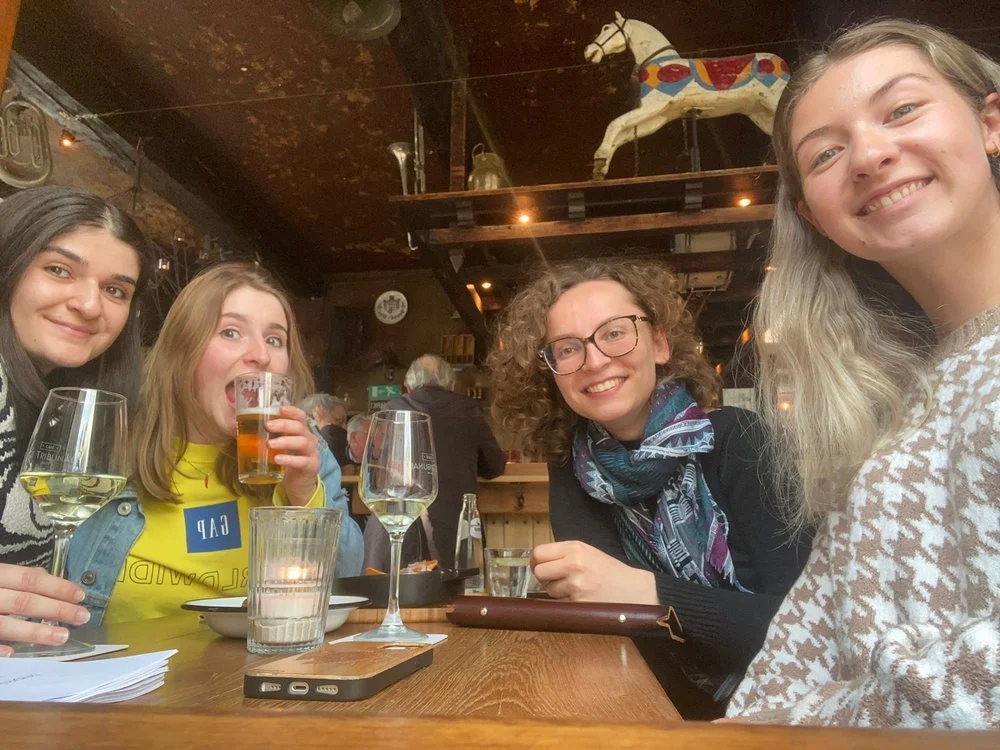


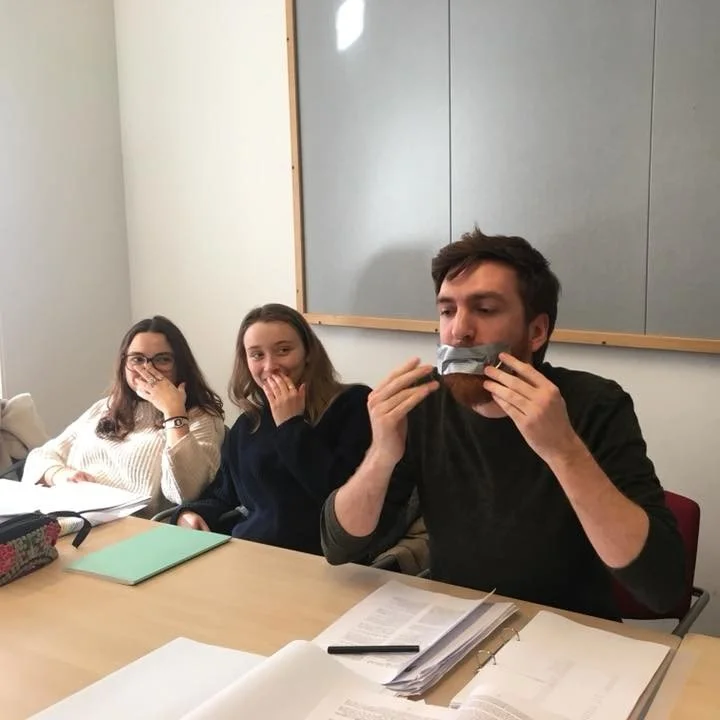


P.S. I suppose if I had to describe IBL with three items, it would be: 1) Natto, 2) Duct Tape, and 3) Alcohol?
On a Path to Becoming a CEDR-Accredited Mediator

I just wrapped up the Accredited Mediator Skills Training in Dublin offered by the Centre for Effective Dispute Resolution (CEDR) and am very grateful to the wonderful instructors and my (very) enthusiastic classmates.
I would be remiss if I did not mention the Maastricht University Faculty of Law and the previous Dutch Minister of Education, Culture and Science for making my participation in this course possible. It was their prudence and policy decisions that made it possible for an "academic" like me to become a better teacher with a more holistic perspective of dispute resolution I cannot wait to share some of the insights I've learned here with our students.
A very special thank you to my partner for holding down the fort with our kids while I was away getting my learning on. I am a very lucky man. For my CEDR classmates, I leave you with this photo. Those who know, know 😉
At Least We Now Have Air Missile Defense Systems?: How Academics in the Netherlands Can Survive the Draconian Budget Cuts

Last week, I had the privilege of attending the Avond van Wetenschap & Maatschappij in Leiden, where Minister Eppo Bruins (the Dutch Minister of Education, Culture and Science) spoke about the importance of science and the role that universities play in resolving complex societal issues. The speech felt somewhat disingenuous though given the Dutch government’s decision to cut 1 billion euros per year from higher education and research. At the end of the day, I guess you can’t blame a politician for doing politician things (even if they have a PhD in mathematics and physics).
Instead of commenting on the policies of the Schoof Cabinet, I want to take a moment to think (out loud) about how we got here in the first place and how we can get back on track. For example, I’m curious about why many of the Dutch voters felt the need to vote for parties that – amongst other things – promised to cut funding for higher education and reduce the number of international students above and beyond the over-simplified tripe about their alleged racism and xenophobia.
Within the academic bubble, we talk about how these short-sighted policies are detrimental to the Dutch (knowledge) economy. I realize though that in other bubbles, different conversations are taking place: For instance, I understand that the Dutch farmers were quite frustrated with the Rutte Cabinet’s approach to reducing nitrogen pollution, so their vote was perhaps a retaliatory one. In another bubble, some felt that the government was spending too much on asylum seekers while in others, some felt that the Dutch needed to strengthen their military capabilities and to shore up their missile defense systems. The proliferation of these diverging, ideological bubbles leads me suspect that the Dutch have gone quite tribal (including the academics), focusing on looking after their own interests, while minimizing the needs of others or that of society as a whole.
In times like these, we need more bridge-builders. We also need to reframe the way we think about austerity: It should not be portrayed as a zero-sum game, where everyone is trying to claim as much value as possible for their own; but instead, see it as a value creating opportunity for all.
So where do academics fit into this?
Bridging the Gap between Science & Society
I suppose events like the Avond van Wetenschap & Maatschappij help, given that the point of the evening was to reiterate the “importance of science by showing how scientific research is applied in everyday life”. True to its calling, I met academics there doing very interesting research and leaders of industry curious about them.
There was some discomfort though given that this was a very formal, black-tie event (with a three-course menu plus wine service in the stunning Pieterskerk). Juxtaposed to the budget cuts and the uncertainty that many of our colleagues are facing, the extravagance felt a bit tone-deaf, if not callous. Though to be fair, I suppose there is something to be said for formality and tradition. (The fact that I no longer fit so snugly into my tux likely contributed to my sense of discomfort, but nevertheless, there was something uncomfortably insulated about the event).
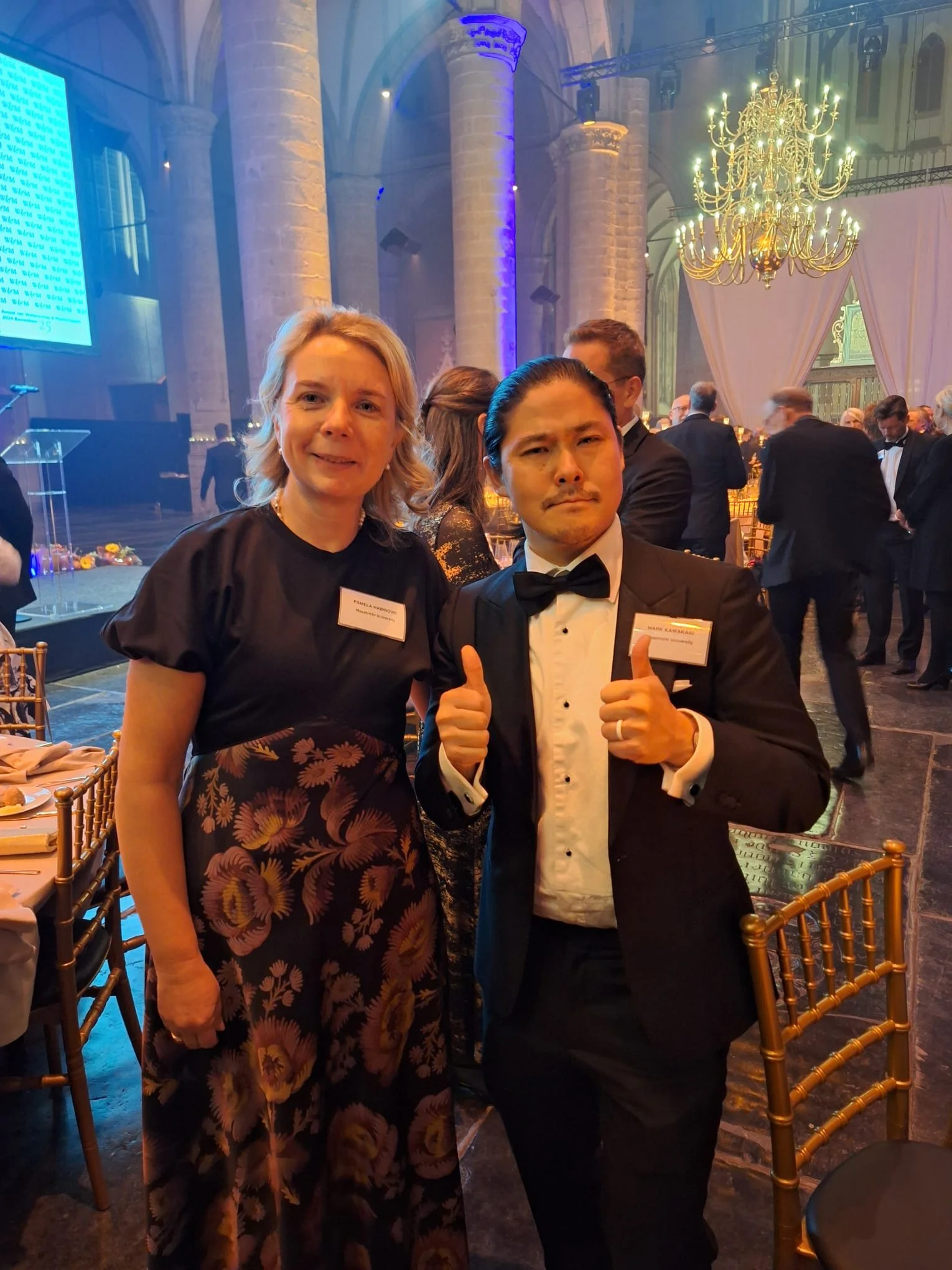
Thank you Pamela for letting me tag along to the event!!
Above and beyond these mingling events (and possibly changing the dress code to something more comfy and accessible like sweatpants), the Open Science movement and its aspirations have some promise to bridging the gap between science and society. By incentivizing research findings (and data) to be openly accessible to everyone (as in not behind a publisher’s paywall), the Open Science movement helps make useful knowledge accessible to all: For example, my wife always speaks highly of the Voedingscentrum (Nutrition Center), which is a free and reliable source of information about food backed by science (e.g. what can pregnant moms not eat, when can babies start eating, etc.).
Another way to bridge the gap is for scientists to be better communicators and to engage with the general public more without boring them half to death. Science Europe defines science communication as “the practice of informing, raising awareness of science-related topics, and also getting involved with audiences that include, at least in part, people from outside the science community.” At the Maastricht level, this is carried out through organizations like Studium Generale (who organize lectures and festivals where academics and non-academics can come together to discuss and debate societal issues) or projects like EDLAB’s Premium (where we match high-performing master’s students with clients in the business and government sectors for a specific project).
My suspicion, given how many Dutch voters voted, is that perhaps we – the academics – can do a better job of convincing the general public that what we do matter. That we are working on making things better for society through our research and teaching. Of course, the task of convincing others will now be made more difficult due to the drastic budget cuts, but at least we now have air defense systems, so at least that’s something. (Also, see how annoying paywalls are?!)
The Academic Industrial Complex
Above and beyond open science and better integration of academics with non-academics, the fundamental shift at the root of our disconnect that should be discussed (I think), is the possibility that Dutch academia is transforming from a civil service institution into a hardcore business. Like a corporation, we often talk in terms of bottom lines and the impact of this transformation is that we have commercialized education and commoditized knowledge.
In this corporate environment, the worth of a teacher is no longer being measured by the positive impact we have on our students, but by how many hours we can teach. The worth of a researcher is being measured more and more by the amount of funding that they can secure for the institution. Of course, I’ve over-simplified this for the sake of dramatic effect and initiatives like Recognition & Rewards are trying to reset the scale, but the lingering sentiment (at least for me) is that I am now a cog in the academic industrial complex.
Inside the complex, there are no specific hours allocated for taking time to connect with people, to reach out to the members of the local community, and to build meaningful relationships with non-academics. If we choose to care about others, we do so at our own peril and these draconian budget cuts don’t help us with these important tasks.
Scarcity Drives Creativity?
So what’s the path forward for academics in these uncertain and turbulent times? In short, we will have to bite the bullet and make do with what we have. In other words, keep fighting the good fight so to say. We should try to connect more with people (to the extent possible) and not just villainize those who voted for the budget cuts. In the end, we all strive for self-preservation and when the going gets tough, it’s only normal for people to get tribal and to think more short-term (there is scientific evidence to prove this). But we have to rise above our tribalistic tendencies and remind ourselves that it doesn’t all have to be a zero-sum game.
We should try to raise our voices and push back on the policies to the extent possible (e.g. you can sign a petition for the government not to cut the higher education budget), but at the same time, we have to use our “big academic brains” to find a way out of this predicament. The good news is that scarcity (sometimes) drives creativity and (perhaps) that is how we get back on track. (If I’m starting to sound like a politician trying to sell you a bill of goods, it’s probably because I am. In short, there is nothing good that comes from these frickin budget cuts, but that’s a rant for another time).
In the long scheme of things, the policies that the current government is peddling will likely have repercussions that the members of the cabinet will have to live with down the line. Eventually (and inevitably), a new cabinet will form and the austerity facing us will alleviate, at which point, we can start to repair the damage caused by their policies. Until then, we must soldier on. Thank God for those air missile defense systems!

P.S. For whatever it’s worth, I’m co-moderating the Open Science Festival on the 22nd of June here in Maastricht, where one of the speakers will be Hans de Jonge, the Director of Open Science NL!