The Substitute Teacher in Ethnography

“You have substitute teacher vibes”

A student recently told me after a tutorial. “Like, not in a bad way,” she added quickly, “but you don’t take things too seriously and it’s nice.”

A few months prior to this particular conversation, I was asked to teach a course on Ethnography. To be perfectly honest, I had to Google what ethnography even was. [According to Wikipedia, ethnography is a subset of anthropology that “involves examining the behavior of the participants in a given social situation and understanding the group members' own interpretation of such behavior.”]

There was a shortage of staff in one of our programs, and they needed someone to jump in (so in some sense, I was indeed a substitute teacher, but I digress). Thanks to the guidance – and patience – of the course coordinators and my fellow tutors (who were actual social scientist versed on the subject),* I got a crash course on ethnography and I was thrown into a classroom full of unsuspecting students (except for the one student who knew that I usually taught International Business Law, who asked out loud “what the fuck are you doing here!?” with a concerned laughter).

In short, the last few months of “teaching” ethnography has been an incredibly enlightening and rewarding experience. Not only did I learn from the prescribed course materials, but because I did not feel entirely confident in my understanding of the subject matter, I was able to make our tutorial meetings a truly collaborative learning experience. I was also a student in this group, trying to learn about – and better understand – this unique research methodology. I listened with curious intention to what the students had to say, without feeling the need to assert my “expertise” on the subject matter (because I didn’t have any to speak of).

Not only was this a refreshing pedagogical exercise, but substantively, I learned about how we can give voice – and thus recognition and validation – to a group of (often marginalized or otherwise “unseen”) people. How we can listen better and be more aware of our own positionality and biases. How we (ought to) balance writing practically to make an impact while also painting a vivid picture (aesthetically and poetically) to put the reader in the scenes that we observed.

At a very meta-level, I learned how to think about reflexivity. I was able to explore all these topics with the students and trule relate to how they experienced learning about these themes. Sometimes, the content was confusing and frustrating. Sometimes, it was profound and provocative. And through it all, we learned – as a group – how to listen to one another better. For this experience, I am so very grateful for the students in my ethnography groups, my fellow teachers for allowing this substitute teacher into their midst and to allow me into their learning process.

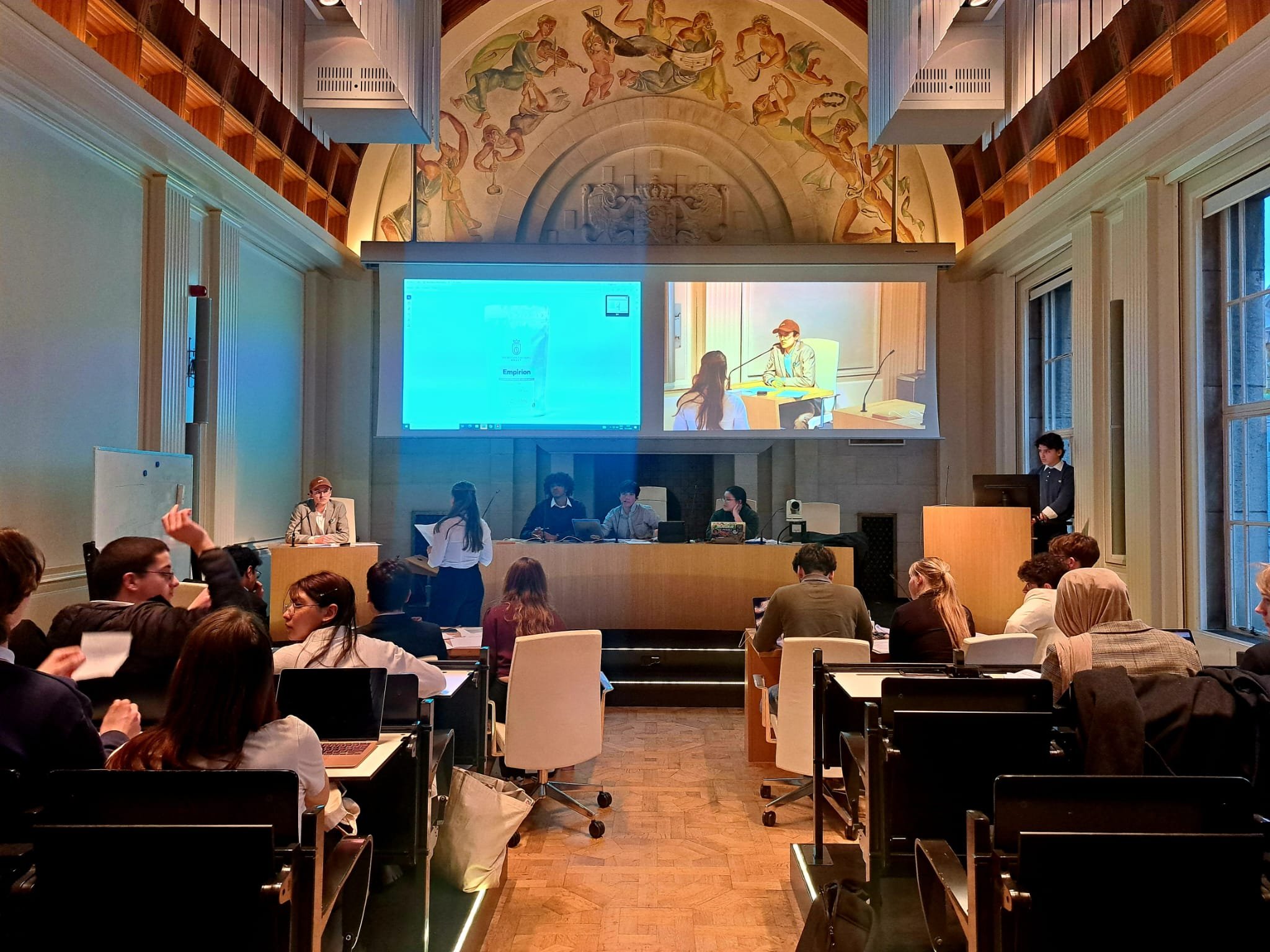
Scene from the Sustainable Global Economic Law Summer School at the University of Amsterdam

As an epilogue (or something along those lines), I have been teaching at the Sustainable Global Economic Law Summer School at the University of Amsterdam this week, where one of the workshops was on “Reading with Ethnographic Sensibilities” (taught by the wonderful Laura Mai and Simone van de Wetering). Thanks to my experience with teaching ethnography, I was able to understand and speak (semi-)intelligibly about the topic during the workshop. It felt as if I had been learning a new language and for the first time, I was able to speak with others in that foreign language. I was able to see the world through an entirely new lens and it was exhilarating! So in sum, I recommend to everyone and anyone, regardless of their discipline, to become substitute teachers in ethnography!

*Shout out to my fellow Ethno-Gs: Lauren Wagner, Dhika Sjamsoeoed Sadjad, Tara Rogers, Obaa Akua Konadu, Masha Denisova, Yiming Wang and most importantly, the students in Tutorial Groups 8 and 9!!

Are Students Customers? (Re)Evaluating the Role of Student Inputs in Curriculum Development

I love getting feedback from students about their learning experiences. So much so that I ask for their inputs before, during and after my courses. From time to time though, I get push back from some of my colleagues that we cannot simply cater to the whims of our students. Channeling their inner Noel Gallagher (see his interview below for context), they say that while democratic inputs from the students are nice in theory, at the end of the day, we (the “wise” teachers with years of pedagogical “experience”) are supposed to know what is in their best interest and should design the courses accordingly (i.e. without too much input from the students).

Noel Gallagher talking about the pitfalls of pleasing customers.

I’m currently in the process of designing a new course on Conflict Prevention & Resolution (CP&R), and as I always do, I sent out requests to students asking them what kind of a course they want CP&R to be. I've always been one to create courses that are very student-centric in the hopes that some sense of autonomy, ownership and intrinsic motivation will keep their engagement high. For example, at certain points of the course, I like putting the students in charge of what they want to learn and incentivize them to teach and inspire their fellow students (without too much input from me). I’ve also been in consultation with the teaching staff, the exam board and the academic director to see how far we can push the boundaries.

However, whenever I talk to people about things like accreditation, quality agreements, exam regulations and the assortment of rules and guidelines that are in place (supposedly) to ensure that everyone gets a decent education, I find myself feeling rather insecure about my (unorthodox) approach and (questionable) practices. This awareness is - if nothing else - something that makes me feel extremely uncomfortable, which makes me wonder whether the university is my john that I’m trying to please, but perhaps that discussion is better saved for another post.

I also realize that while some students like the way I design and coordinate my courses, some do not (e.g. they find it too flexible or I give them too much space). In this “business”, (I’m painfully aware that) there is no way to please every customer (though I’ve tried in vain). So in the end, I design couses that I want (or that I think the students will find useful and interesting), while also creating moments where I cater to the “customers’ wishes”. In doing so, I think I’ve found a Pareto-optimal solution, but whenever I speak to colleagues who are a bit more “traditional” or the Noel Gallaghers of this world (that think I’m making the courses too student-centric), my imposter syndrome goes on overdrive, making me wonder whether what I am offering is just a middle of the road, garden variety mediocrity.

The thing is, I love Oasis and I think Gallagher has a point (to some extent, even though he’s a Mancherster City fan). Sometimes, in order to push the boundaries and to make progess, we must deviate from the norm (to paraphrase another rock legend, Frank Zappa). The customers will eventually learn to like something new, so long as what's new is also good. So as I embark on yet another journey of curriculum design and development, I find myself less than 100% sure that what I am doing is actually “good”. I’m also hoping that with enough enthusiasm and care when I actually teach the course that the students won’t realize - or really care - that I don’t exactly know what I’m doing (a la Sergio Juárez Correa). What I can say in my (partial) defense, is that without the flexibility and the autonomy that I offer to the students, I don’t think a student like Jan (see below) would ever have felt comfortable enough to do a presentation like the one he did (which was awesome).


Conviction to a Singular Narrative and the Burdens of Nuance

Aging Convictions

As I get older, I find myself becoming more uncertain about more things. Just to name a few, I am no longer convinced about some of the ideas that I advocated for in my PhD (i.e. CSR isn’t really working). Similarly, while I would still like to believe – or hope – that many of our differences can be bridged through patience and dialogue, or that a university is a place where people can – and want – to come together to learn, I find these convictions somewhat wavering these days.

Not so long ago, I was loudly advocating for the importance of listening. About how our inability to listen to one another – especially to those that we disagree with – further polarizes us, creating more division and acrimony. Looking back, I am wondering whether I was too naïve or maybe just too young and inexperienced to believe in such lofty ideals. At this moment, I am at a loss, unsure about where to start when I see the news or the conflicts that surround me. As a result, I find myself reluctant, and at times even timid, to voice my opinion out loud as I am uncertain of what I believe in anymore and scared of undesirable repercussions.

Multitudes and Nuances

I think this is part of the sobering realization that comes with getting old (a rather unceremonious process after a certain age) that we live in a tangled, complex world, where no singular narrative covers all multitudes and nuances. More often than not, there are various perspectives to every story and even the firm beliefs that we once held dear can change or fade over time. While some things are still fundamentally right or wrong, there seem to be a lot less of these certainties in this world than we once believed. I guess this is one of the thousand reasons why getting old sucks: Our spirited convictions are replaced with careful circumspection, the former being more straightforward and the latter being more nuanced (and perhaps uninspiring).

There is a corresponding benefit that comes with this adjustment though, which is that acknowledging nuance and removing ourselves from our entrenched convictions invite us (or at least me) to be more open-minded and willing to listen. In doing so, I think we become more accepting of the idea that our beliefs are not necessarily absolute truths and that multiple views can coexist simultaneously (albeit with lingering tensions).

Punching Down

While I do not have as many convictions as I once had, one principle that still stands, relatively less shaky than the rest, is the belief that those in positions of power should never punch down. Similarly, I feel that absolute devotion to a singular narrative is a luxury afforded to the youth, but an unaffordable indulgence for those in positions of power (usually the “older” folks). For example, while it may be acceptable – if not encouraged – for students to protest and voice their concerns against the university administration, it is less tolerable for a university to impose its singular narrative on all its stakeholders. This is part of the reason why most universities are usually careful to listen, do their due diligence, and weigh the interests of all stakeholders (perhaps to the chagrin of those protesting).

The question that gets triggered here – and the one I struggle immensely with – is what happens when those protesting not only punch up against the system, but also punch down, creating an undesirable situation where other members of the community are wrongfully villainized or worse, threatened because of the protests? This aggravation, not to mention various other forms of vandalism and disruption, is what (un)justifiably compels some universities to escalate the situation, calling on authorities, who sometimes use unnecessary violence to suppress the “disturbance”. When the police resort to force, it creates new feelings of injustice, provoking further escalation and retaliation. The problem, thus, gets snowballed into something more entangled and complicated.  

Hoping Against Hope

This throws me right back to the starting point, where I am no longer sure about what is clearly right or wrong in these situations (though I do have some ideas). I think about whether things can be handled differently and how we can foster more space for dialogue, nuance, and learning, which is what we are supposed to be promoting here at a university in the first place.

I still want to believe that change is possible through listening to one another and fostering a better understanding between people of different walks (or that CSR could still work?). I believe in the importance of punching up against oppression and that participating in civil disobedience is not only an incredible learning opportunity, but a rite of passage for many college students (I for one, raged against the machine during Occupy Wall Street, which feels like ages ago). I don’t like bullying and the ostracization of others. In the end, hurt people, hurt people so we need to find a way to break this cycle. To de-escalate. To listen, even when it’s hard. To (re)connect with one another, for we are afforded the extreme luxury and privilege to do so that many do not have. 

Learning GenAI Together (or Teaching Old Dog New Tricks)

I always end up spending a few weeks every teaching season researching and drafting a fact pattern suitable for a legal memorandum (the final assignment the students have to complete for my International Business Law course). It usually contains various elements that touch upon international sale of goods, carriage of goods (by land and sea), international commercial arbitration, and payment mechanisms, all intertwined with an assortment of societal issues and current trends.

Of course with the advances in GenAI, the temptation to rely on it to facilitate this (often laborious) task has been growing. Just last year, I lamented about the burdens of drafting dozens of recommendation letters each year and how ChatGPT might (not) ease my workload. However, in just one year, we’ve witnessed exponential growth, not only in GenAI’s capabilities (e.g. from ChatGPT 3.5 to 4.0), but platforms offering AI backed services have mushroomed as well. With the hype surrounding this development, I was excited to apply my limited prompting skills in asking ChatGPT 3.5 to draft a case fact for me, and below is what I got in return (much to my disappointment):

Now if you’re already a “prompting guru” and a master of GenAI, you’ll tell me that my prompt was not specific enough and that I need to learn how to prompt better (and you would be absolutely right on both counts). But here in lies my central question: where does a reluctant boomer with diminishing cognitive capacity go to learn how to use these emerging technologies? The answer was somewhat obvious given that we (supposedly) use a student-centered, problem based learning method at our university anyway. So I decided to ask students in my class to show this old dog some new tricks. I ended up devoting a week’s worth of tutorials to work together with (read: learn from) the students, who have been assigned to draft a legal memorandum (the facts for which I had to - once again - research and labor through on my own).

IBL students working with GenAI tools in class to find answers to their legal memorandum assignment.

During our tutorials, we played around with assortment of different platforms (e.g. ChatGPT 3.5 and 4, Copilot, Consensus, Typeset, Perplexity, Quillbot, etc.) and on each platform (some for free, some not), we tried different types of prompts and discovered which platforms were useful in drafting a legal memorandum, and which ones were not. What also became apparent was the differences in the level of familiarity and competence amongst the students on dealing with GenAI. Some had never really experimented with GenAI before, while others were quite familiar with all sorts of platforms and prompts. (This confirmed the survey results that we collected from 100+ students earlier this year from our Faculty of Law, School of Business and Economics, and the Faculty of Arts and Social Sciences).

The general consensus seemed to be though that GenAI can be really useful for language edits (e.g. Grammarly) and for some (non-legal) research (e.g. differentiating between lab grown cordyceps v. natural cordyceps etc.), but not necessarily for in-depth legal research. To be fair, some platforms were indeed better than the others. For example, ChatGPT 4 was indeed better than 3.5 (although whether it was worth the €20 a month subscription triggered a prolonged discussion) and platforms like Consensus or Perplexity returned “more academic” results that produced more useable content for the memorandum. What was interesting to note was that some of the better answers provided by these platforms relied on sources that were already available to the students in their course material, begging the question, would the students have been better off if they just read the course material in the first place, rather than going down the GenAI rabbit hole.

In the long rung, however, our reliance and dependence on GenAI feels almost inevitable (in some way, shape, or form) and those who cannot utilize it competently, may lose out to those that can. As one student noted in our survey:

It is unavoidable. It is better to learn how to use it than to avoid it. If you don’t act fast you will fall behind. Universities should never ban it. Rather, teach how to use it responsibly.
— Joost Hamers (IBL Student)

I agree with Joost 100%. The problem, however, is that many of the staff members (including myself) have not been adequately trained to use GenAI, and perhaps paradoxically, we have to learn from our students who were early adopters. In a way though, this presents a perfect opportunity to flip the script and have some of the students lead us in the learning process (as we did in the IBL tutorials). For whatever it’s worth, I learned a lot from my students in doing this and plan to continue doing this. So in sum, I am humbled by this learning opportunity, grateful to the students for teaching this old dog new tricks, and perhaps most importantly, I am sorry that the case for the memorandum this year is about zombie mushrooms and liquid cocaine. I only have myself to blame (and not GenAI).

The Magic of ELS Alums Mentoring Our Current Students

Last week, we invited Sophie Voigt (ELS, Class of 2023), now a transactional lawyer at Freshfields, to speak to our current ELS students about her career trajectory. Having gone straight from her LLB to working for a big firm in Germany, Sophie had a lot of insights, tips, and answers to questions that our current students had: She answered questions ranging from how she got her job, her favorite interview questions, how ELS prepared her for practice (if at all), what kind of profiles big firms are looking for in their applicants, and the path to becoming a solicitor in the UK even as an ELS grad (under their new Solicitor Qualification Exam) with two years of qualifying work experience (i.e. working as a transactional lawyer).

I am so proud to see ELS alums succeeding out in the real world, and I love it even more when they take the time to share their experiences to guide/mentor our current students.

I am not only grateful to Sophie, but last week alone, I reached out to other ELS alums like Kamila Sotomska (ELS, Class of 2017) and Annika Harju (European Studies & Law, Class of 2020) asking if they would be able to mentor a few current students, who are facing similar issues that they themselves expericed as students and they have been incredibly generous and kind in offering to help their juniors. Others like Eve Meurgey (ELS, Class of 2016), now working as an Associate at Herbert Smith Freehills, I’ve pretty much bothered every year, any time an ELS student has a question about qualifying in the UK. Much to my pleasant surprise, she has not blocked or ghosted my communications, allowing me to share her contact info with students so that they can ask her questions directly.

So a big special thank you to Sophie, Kamila, Annika, Eve, and to all the other ELS alums helping out current ELS students!! You are the network that keeps ELS going strong and we cannot thank you enough!!

UWC & UM Mock Trial of Nicholson v. The Chronicle Tides: A Wild Success (A Biased Reflection)

It was September 2022 when Sueli Brodin kindly introduced me to Maria Vatista as I was looking for volunteering opportunities at the United World College Maastricht. An in-person-meeting and a cup of coffee later (of what was once known as The Student Hotel), Maria and I started scheming assortment of ideas together. Later that week, she introduced me to Aidan Hollinger-Miles, a high school Junior at UWC, who was bursting with fireworks full of ideas and infectious energy. Following these introductions, I started visiting UWC frequently to meet up with Maria, Aidan, and his group, colloquially referred to as the Justice Club (although our WhatsApp group was more modestly called “Law Stuff”, but I digress). The Club organized a mock trial at the UWC in 2023, but Aidan - for his Senior year - wanted something even bigger and better. This was when the idea of doing a mock trial with the support of UM students and staff popped up.

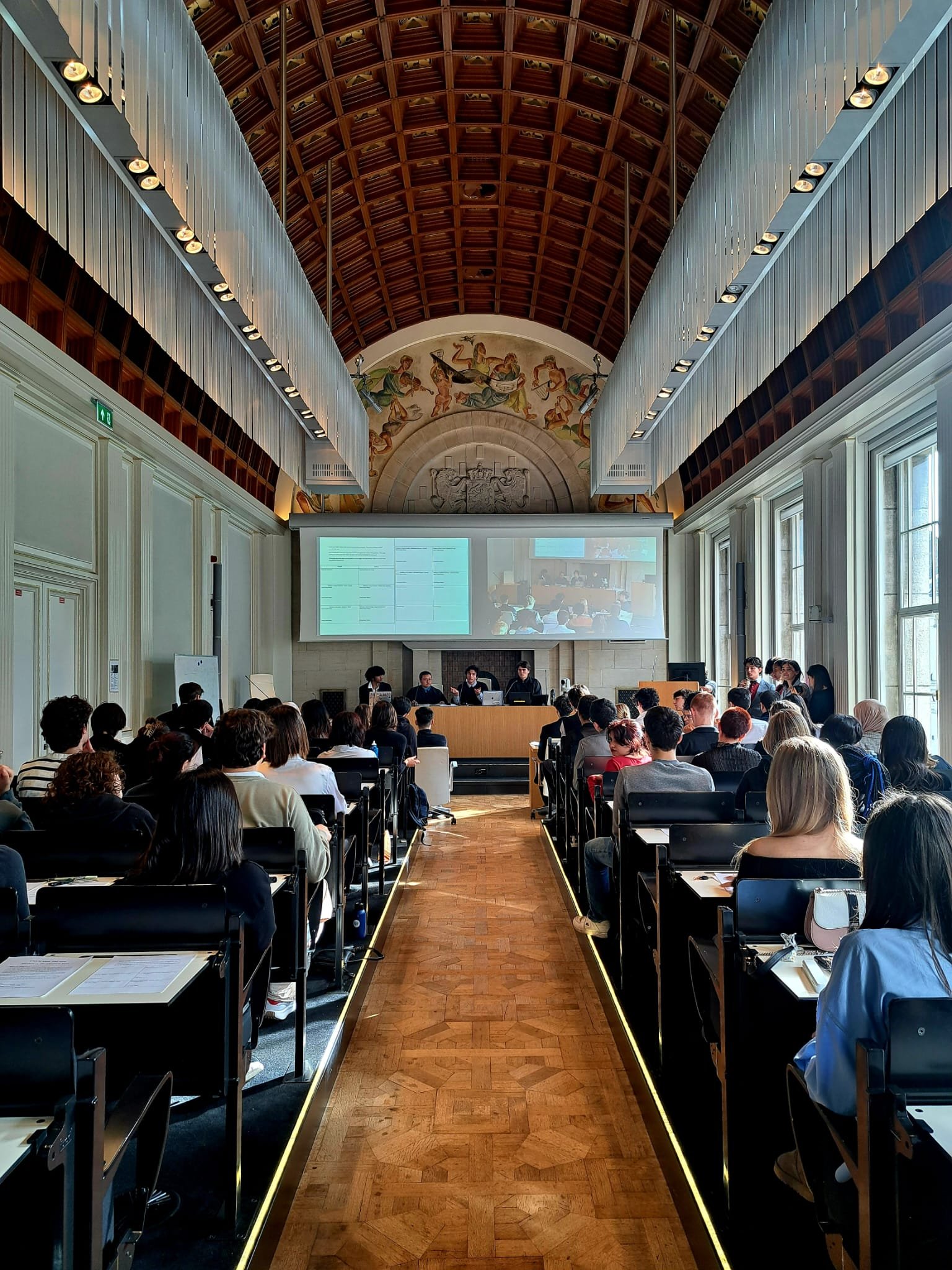
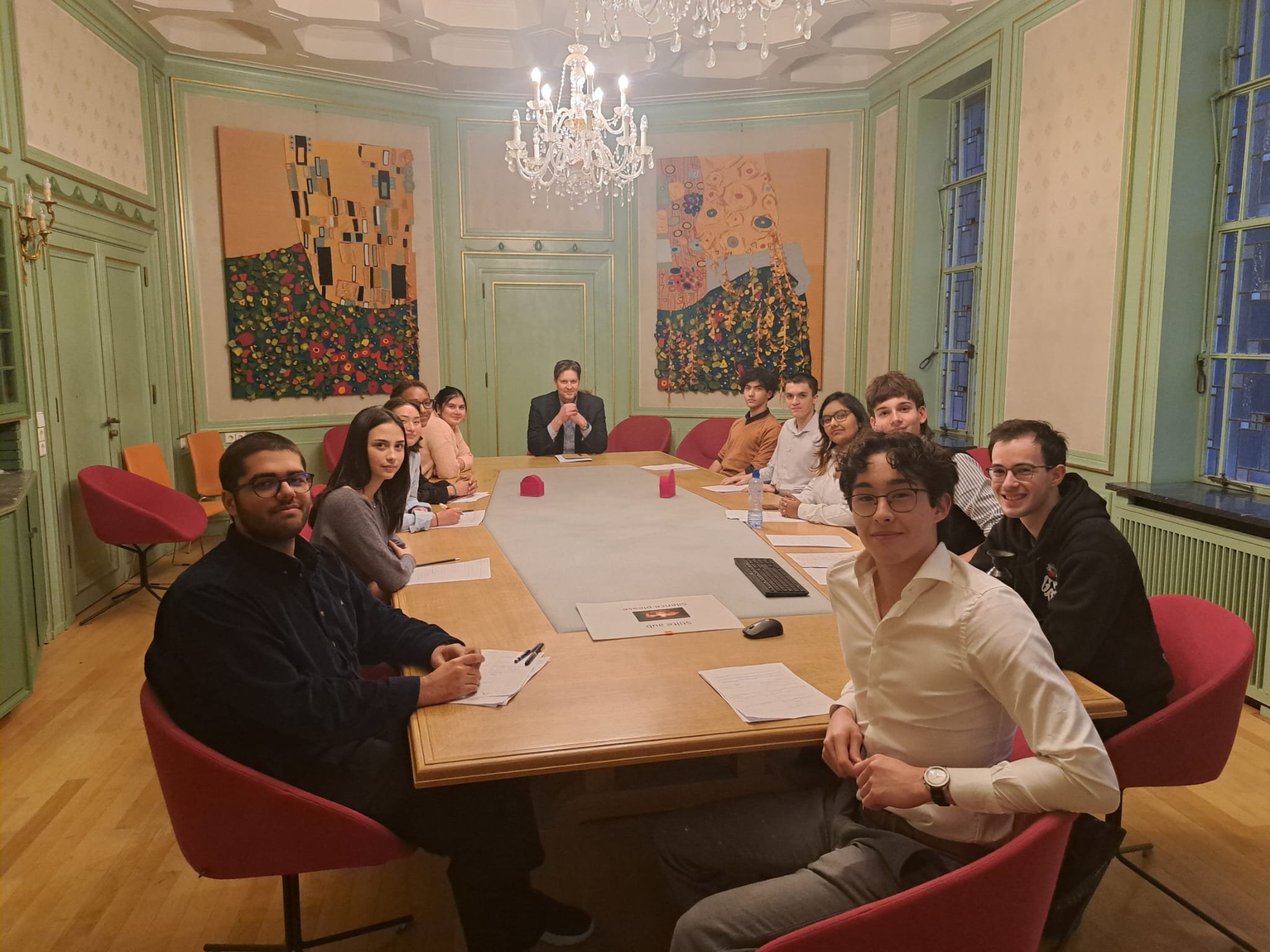
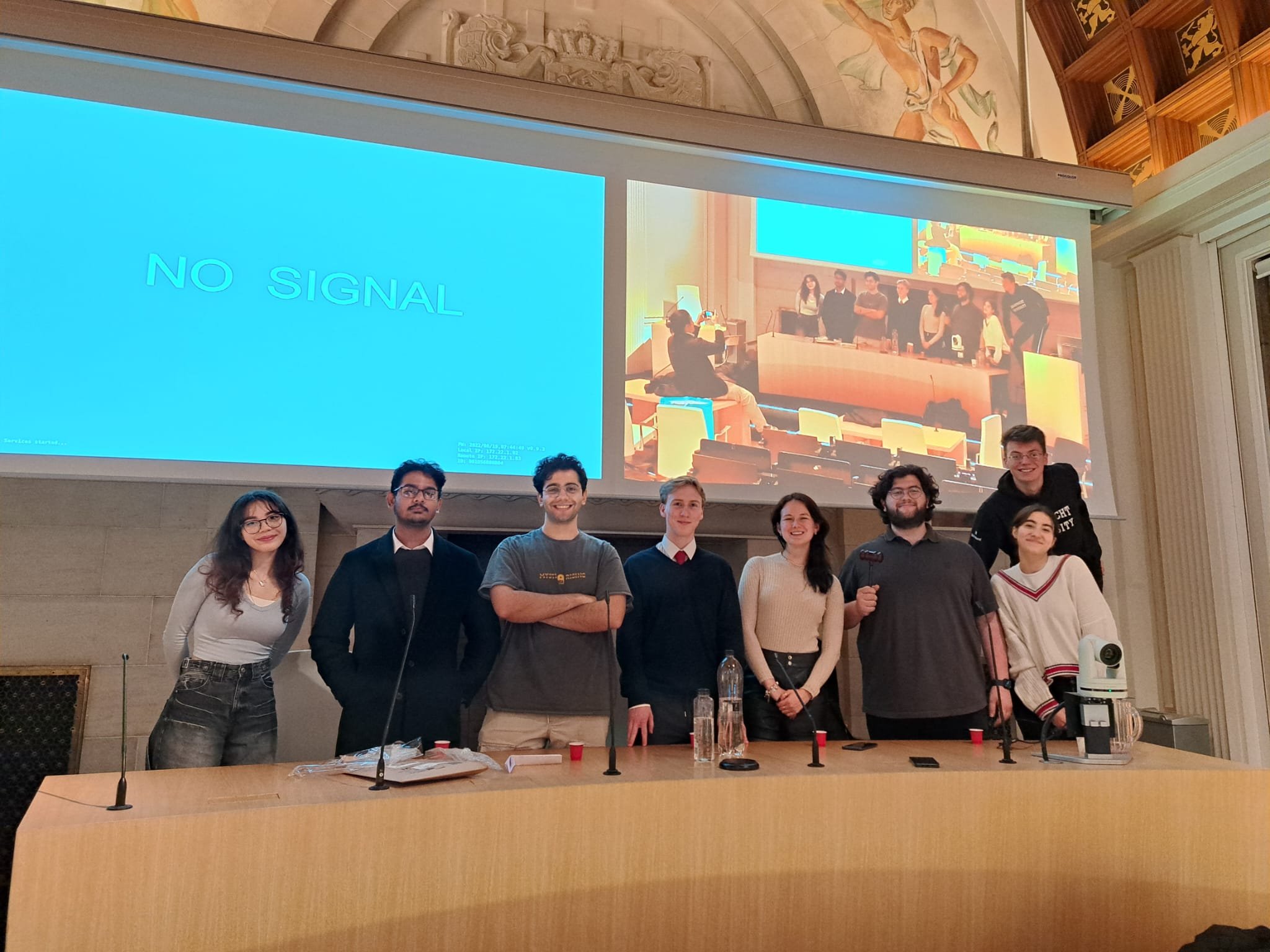
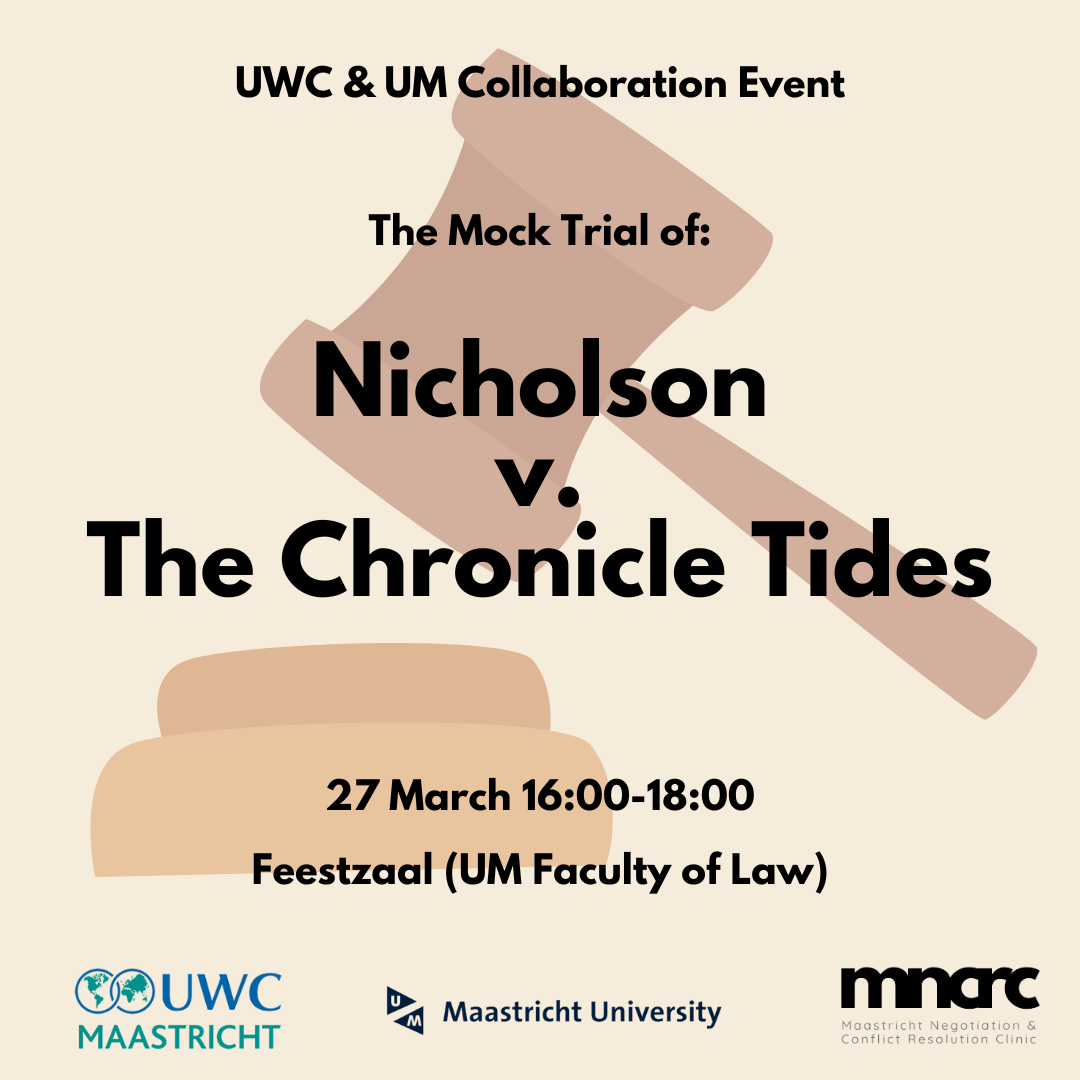
Just last week (almost a year and a half after our initial cup of coffee together), we organized the mock trial of Nicholson v. The Chronicle Tides, a manifestation of Aidan’s vision, brought to life by Maria, the extremely competent and dedicated organization team from the Justice Club, other UWC students (serving as judges, jury members, lawyers, witnesses, plaintiffs, etc.), and UM students mentoring, guiding, and organizing the event.

The event, if I may say so myself, was an absolutely success. The UWC students were extremely engaged and very enthusiastic. Behind the scenes, Maria and the UM volunteers were greasing the wheels to make sure that everything went smoothly and accordingly (even running a “dress rehearsal” weeks prior to the main event to perfect - not only the substantive elements of the mock trial - but also the theatrical aspect of it all, from the lighting to the presentation of the exhibits on the big screen). We really couldn’t have asked for any better (even the catering from King George was insanely delicious).

Of course I am extremely grateful to Aidan, Maria, and the organization team as this would not have happened without them, but I would be remised if I did not give a specific shout out to the UM volunteers, who invested a lot of time and effort (even sacrificing their time to draft the IBL memorandum and exam prep) to be a part of this event. Ana, David, George, Leanne, Rozer, Sarah, Sreyas, and Ziya, thank you, thank you, and thank you!

As they say, there is no rest for the wicked, and so we now on to the next event, TEDxUWC Maastricht, where I’m hoping to loop Yama Saraj into this mix. It’s all about connecting good people, building a community together, and making an impact where we can, one small step at a time. I love this part of my job!!

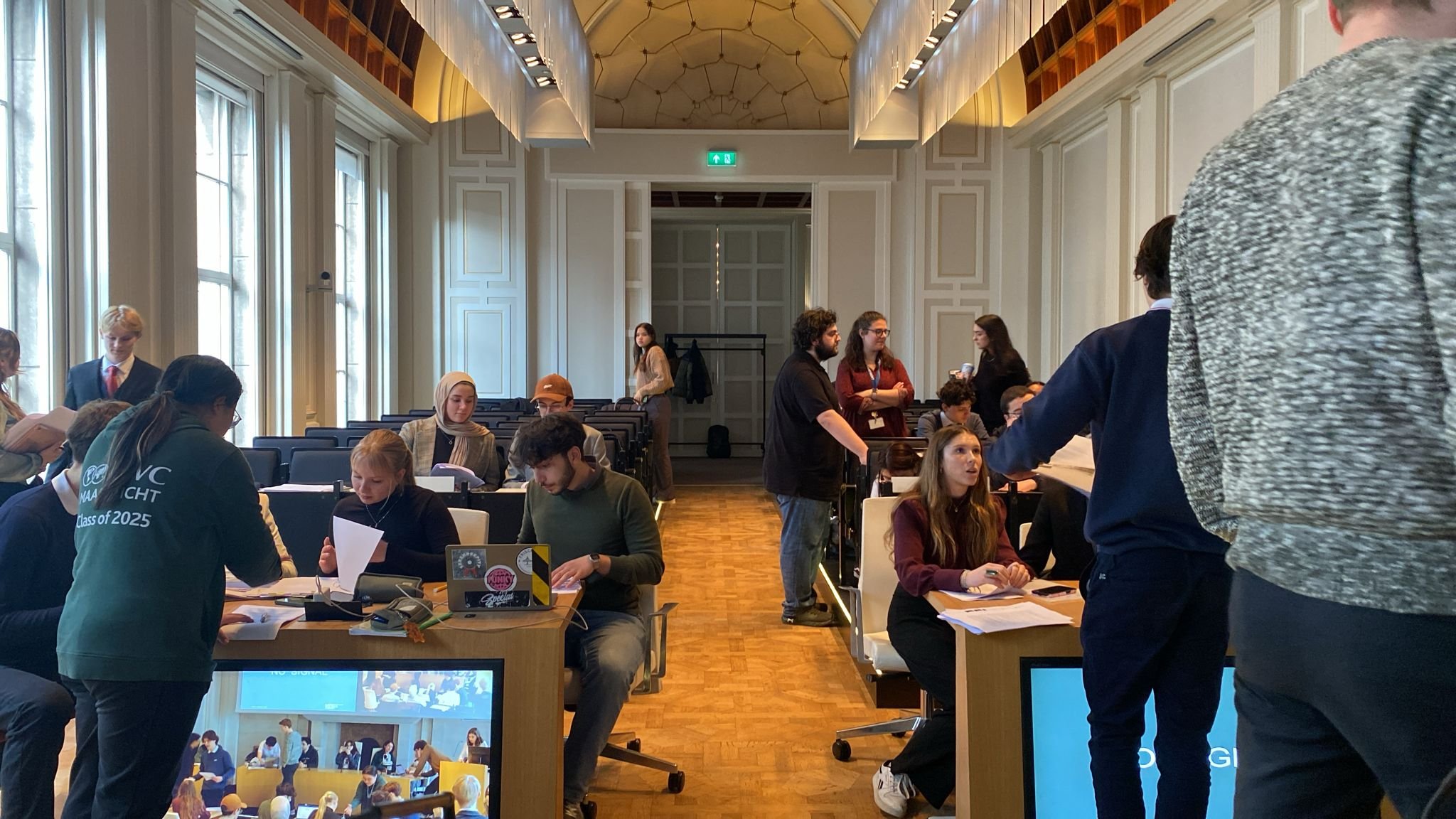
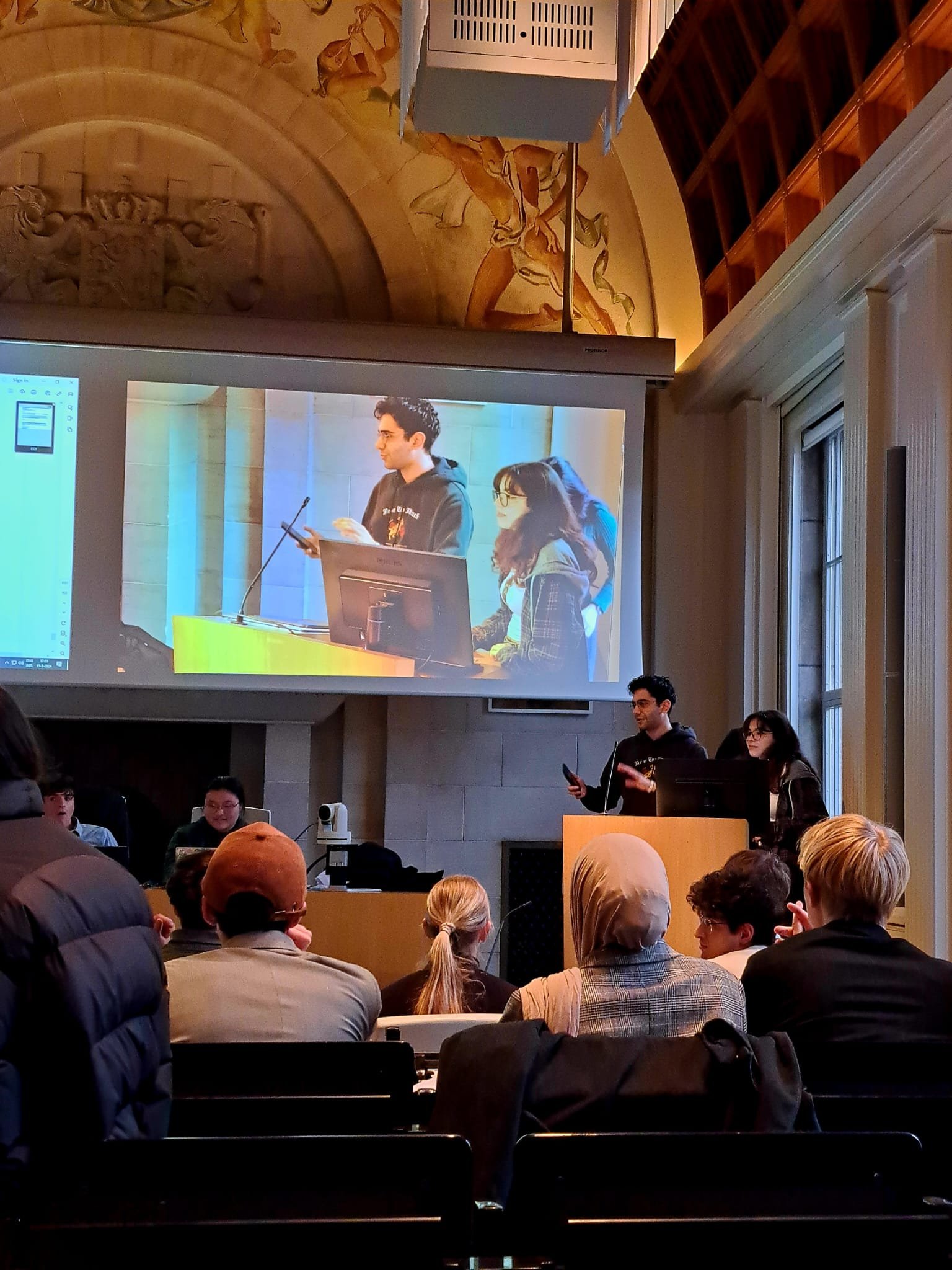
UWC Maastricht and UM Collaborating on the Nicholson v. The Chronicle Tides Mock Trial

The Maastricht University Faculty of Law and the Maastricht Negotiation & Conflict Resolution Clinic are happy to host students from the UWC Maastricht conducting the mock trial of Nicholson v. The Chronicle Tides with guidance and mentoring from our students. Very happy for this collaboration and a special thank you to Maria Vatista for facilitating this joint effort!

Special shout out to our mentors & volunteers: Leilani Radaideh, Leanne Ligtenberg, David Čurilla, Rozer Kleige, Sarah Ennimer, Ziya Sterken💪, George Pliakas, Sreyas Susarla, Ana Dominguez Rodriguez, Reuben Ang, and Marc Bernhard. Grateful of your sense of community and service 🖖

Maastricht Mediation Clinic ➡️ Maastricht Negotiation and Conflict Resolution Clinic

Four years ago, Catalina Goanta and I passed on the duties of managing the Maastricht Mediation Clinic to Nikki van Dijk and Kristien Festjens, who graciously took over the clinic's reigns. As various other engagements have taken up their time more recently, I've agreed to take back the management of the clinic.

With this transition, I've also decided to broaden the scope of the clinic from just focusing on mediation to something a bit broader: The result is the formation of the Maastricht Negotiation & Conflict Resolution Clinic. For our first event as the MNCRC (organized jointly with our International Business Law Course), we are honored to host Eva Chan, who was recently elected as the Co-Chair of the Young International Council for Commercial Arbitration. We are very grateful to have Eva share her experiences, not only as an Associate at Skadden Arps, but as someone who is now leading the immense knowledge network that is the Young ICCA.

The Young ICCA is an organization that is opening doors for early-career-practitioners and students to the world of international commercial arbitration through skills training workshops, mentoring programs, and assortment of other admirable efforts, which we hope many of our students at the Maastricht University Faculty of Law will sign up for (especially after Eva's talk).

The Young ICCA is an organization that is opening doors for early-career-practitioners and students to the world of international commercial arbitration through skills training workshops, mentoring programs, and assortment of other admirable efforts, which we hope many of our students at the Maastricht University Faculty of Law will sign up for (especially after Eva's talk).

Lastly, I would also like to extend my gratitude to Catalina, Nikki, Kristien, Mardoeka Christensen and Monique Benning (formerly with Stichting Trajekt), who made the MMC possible. I am also very thankful to all of the people who have participated in our events and clinical trainings over the last ten years. You know who you are. I hope that as we attempt to grow our MNCRC community, you will continue to be interested in our ongoings. Mahalo nui loa!

Being a Foreigner in The Netherlands Now

The arc of the moral universe is long, but it bends toward justice.
— Martin Luther King Jr.

I remember this doom and gloom feeling from back in 2016, right after Donald Trump won the US Presidency. Having voted for Hilary Clinton that year, I was not only disappointed, but horrified by what Trump’s victory would mean for people like me (i.e., a minority). Reading the news and the dreadful speculations of what Trump would do in office became an agony-inducing, traumatic experience (so much so that I stopped reading the news for about 3 years). I remember asking my PhD supervisor very soon after that election whether I could stick around in Maastricht when I was done with my PhD. Even as a foreigner, I felt more safe and more accepted in The Netherlands than I did back home, or at least I did back then.

Last night’s election in The Netherlands - and PVV’s commanding victory - brought back remnants of this foreboding feeling. So much so that it immediately made me feel less comfortable being a foreigner in The Netherlands. However, having experienced this feeling once before, my despair has been - so far - less apocalyptic. I find some comfort in knowing that politics, more often than not, is a process of perpetual oscillation. At least in most democracies, parties and politicians will rise and fall at the whim of its citizens. While for the time being, many Dutch citizens have opted to support Geert Wilders (it’s either that or they could no longer tolerate what the VVD-led coalitions were peddling), this phase too shall pass. As they say about the weather in New England, if you don’t like it, just wait a few minutes.

Behind this cognitive bravado though, I am actually quite shaken up by the thought of Wilders becoming Prime Minister (even though it would be his democratic right to be one), as I am a foreigner living on foreign soil with a government that is increasingly hostile towards outsiders (Timmermans’ post-election speech, while nice, was not very reassuring). Nevertheless, given that I teach courses that advocate for empathy-building and communicating (even) with people that we disagree with, I am actively trying to do my utmost to rationalize this current situation: For example, I try to see (most) PVV voters’ decision, not as a personal attack on foreigners, but as a manifestation of their frustration for having had their voices slighted for too long by the majority. After years of Mark Rutte and the VVD holding the reigns, a large percentage of the Dutch population wanted something different. Add to that, a relentless increase in their costs of living, a terrible housing crisis, and the perception that their government was putting their interests behind that of others, these voters just wanted the status quo to change. Even if that meant voting for an extreme-right, nationalist party with a leader that wants The Netherlands to ban the Koran and to leave the EU. This was a vote - however myopic - intended for self-preservation, using foreigners and migrants as scapegoats for their woes. As they say in relationship psychology, “hurt people, hurt people” and this, I think, is what we are witnessing.

I also think this situation is a perfect manifestation of what Paul Bloom describes in his book, Against Empathy, as the circle of empathy and the limits thereof: We, as individuals, often exhaust a lot of energy taking care of ourselves and those close to us, but less on those that are outside of our immediate circles of empathy. Wilders’ promise for the Dutch to “get their country back” and to stop the “asylum tsunami” is not only a dog whistle to galvanize an anti-immigration movement, but a misguided move towards making the Dutch circle of empathy smaller. While some may not see the immediate problem with the idea of only looking after their own, Martin Niemöller’s poem, First They Came, serves as a haunting reminder of why this isolationist approach never really works out in the long run.

So this is where I find myself: my rational mind at odds with how I feel. Today, while dropping off my son at school and going to the library with my daughter (both Dutch citizens), I couldn’t help but to wonder which of the people I came across in the city voted for PVV (which in Maastricht is one in every four eligible voter). My rational mind would say that these are not bad people. They are hurt too. They just want self-preservation and protect their loved ones. But my timid heart wanders and whispers into my ears, “they probably don’t like you” - or worse - “they might bully your kids because they look like outsiders” and I find myself scared and worried. So I am hurting. But somehow, I have to make sure that I don’t feed into the cycle of hurt. The problem is, I’m not sure if I can. I don’t know if the weather will change quickly enough. But while I wait for my rational mind and how I feel to be more in alignment, I’ll continue to take my Dutch classes and try to pretend that I am not-so-foreign by humming Sinterklaas songs while I cycle around the city on my bakfiets. Just in case.

Our Career, not as a Ladder, but as a River

Last week, I got to host Prof. dr. Christine Neuhold (the Dean of Maastricht University Faculty of Arts and Social Sciences) for the Maastricht Young Academy’s Growing Up in Science event. She shared with us her story of resilience, finding joy in what she does, and much more. While there were many aspects to her story that I found inspiring (i.e. "color the cow green"), I was particularly moved by her idea, not to see our career in terms of a ladder for us to climb up or down, but as a river. Our career is not something linear. Instead, like a river, it weaves and flows, branching out at times and merging together at other points. Thank you again Christine for all your hard work as a Dean and for sharing your motivational words with us!